Year 22
Earth AbidesYear 22 is the year the community marks on its rock calendar but leaves unnamed, a break in a ritual that had made each passing year legible through both a number and a chosen title. At the close of the twenty-second year, the people gather as usual to cut the numeral 22 beneath 21; when Ish asks what the year should be called, silence gives way to Ezra’s proposal that they remember it by its number alone. The custom endures, but its naming part yields to grief.
The Calendar and Its Winter Gathering
The community’s annual reckoning is tied to the turning of the sun and to a communal ceremony at the rock. As the sun approaches the southern limit of its course, people prepare for the holiday; when they observe it setting in the same place, or perhaps a little farther north than the night before, the older children recognize that the solstice turning is near. The next day becomes the occasion for the gathering. The ritual gives the passage of time a shared, visible form: Ish cuts the year’s numeral into the rock with his hammer and cold chisel, and the people assemble to greet the new year.
The celebration combines customs from the Old Times with practices that have become the community’s own. It serves as both Christmas and New Year, while its distinctive act is the carving and naming of the year. Other inherited holidays survive unevenly. Thanksgiving remains a large dinner; April Fool’s Day and Halloween are still celebrated enthusiastically by children who have learned their customs from their parents. George observes Labor Day in his own traditional way, wearing his best clothes and stopping work, though no one else joins him. The Fourth of July and other patriotic holidays have lapsed. Against this varied survival of older customs, the rock ceremony has become the community’s defining annual observance.
A Year Difficult to Name
In the days before the gathering, the children consider possible titles. The youngest favor Year of the Bow and Arrow, reflecting the bow’s recent importance; children old enough to recall more of the year suggest Year of the Journey. Among the older children, however, the conversation gives way to quiet and embarrassment. They are thinking of Charlie and the other deaths. Ish’s thoughts turn first to Joey, and then to the changes in attitude he himself has had to make. Their competing proposals reveal how the same year can look different at different ages: a new skill or journey to the young, accumulated loss and changed convictions to those who remember more.
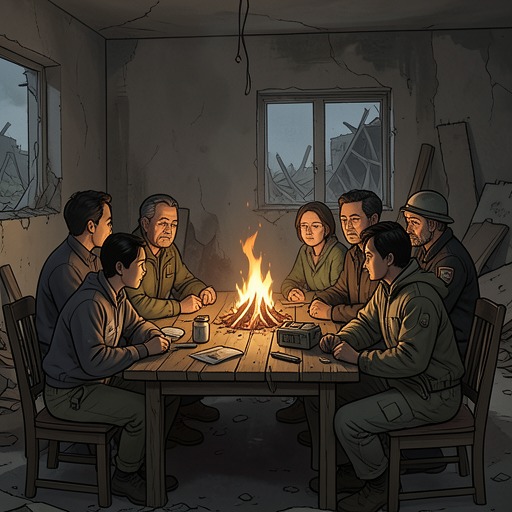
The epidemic is one of the year’s gravest burdens. A week after it began, Richard, Robert’s companion on the expedition, had fallen ill; Ezra and five children were then stricken. Ish believes the outbreak is typhoid. Some adults had been inoculated in the Old Times, but their immunity had likely faded, and the children had no protection. Because prevention had been central to controlling the disease and no remedy remained once it took hold, the community could do little but endure its course. More people fell ill day by day, while those still able to care for them were worn down by nursing. At that stage no one had died, but no one had passed the crisis either, and the growing number of sick made the future feel precarious.
Fear also unsettles the community’s sense of what the epidemic means. George, Maurine, and Molly turn to prayer, joined by some younger people, and fear that God is punishing them for Charlie’s death. Ralph considers taking his still-unstricken family away; Ish argues against leaving, since they might already be infected and could face illness alone. The threat is therefore not only disease but the possibility that fear will scatter the people whose mutual care is essential to survival. The year’s later silence at the rock gathers these strains without assigning them a single explanatory name.
Decisions, Loss, and Changed Convictions
The deaths remembered at the naming ceremony include the consequences of choices made within the community as well as losses caused by illness. In the dispute over Charlie, Em frames the alternatives as banishment or death, and four people prepare ballots. Paper comes from a living-room desk where the children usually draw; Ish tears a sheet into four slips, distributes them, and begins to write. The vote is conducted with a stated intention to act without haste, passion, or hatred. Yet, in retrospect, Ish feels that a kind of innocence has faded from the world since the four of them wrote on those ballots. The procedure establishes collective decision-making, but it does not leave the decision emotionally weightless.
Joey’s loss is irredeemable to Ish, and it is the first loss that comes to mind when the older children fall quiet. Alongside grief, Ish recognizes the collapse of a confidence he had held: his dream of re-establishing the ways of civilization has had to be abandoned. The year’s title cannot easily select one episode from this accumulation. A bow, a journey, the ballot, the epidemic, and Joey’s death each give the year a different meaning; choosing one would risk making the others secondary.
Number Without a Name
At the ceremony, everyone gathers at the rock on a day described as fair and warm for winter. Mothers bring even the youngest babies. Ish cuts 22 just below 21; those old enough to speak call out the customary New Year greeting. The familiar actions continue in order, and the presence of the whole community affirms the ritual’s endurance. But when Ish asks for the year’s name, the gathering falls silent.
Ezra finally suggests that they assign no name and remember it only as Year 22: too much has happened for any chosen title to sound good to them, while numbers offer comfort without carrying bad thoughts. His answer does not erase the losses or resolve their meaning. It changes the work the calendar is asked to do. The number preserves sequence and collective memory, but the absence of a title declines to turn grief into a slogan. Year 22 thus records both continuity and a limit: the community still gathers, counts, and remembers, yet for this year it chooses not to make a single phrase stand for what happened.